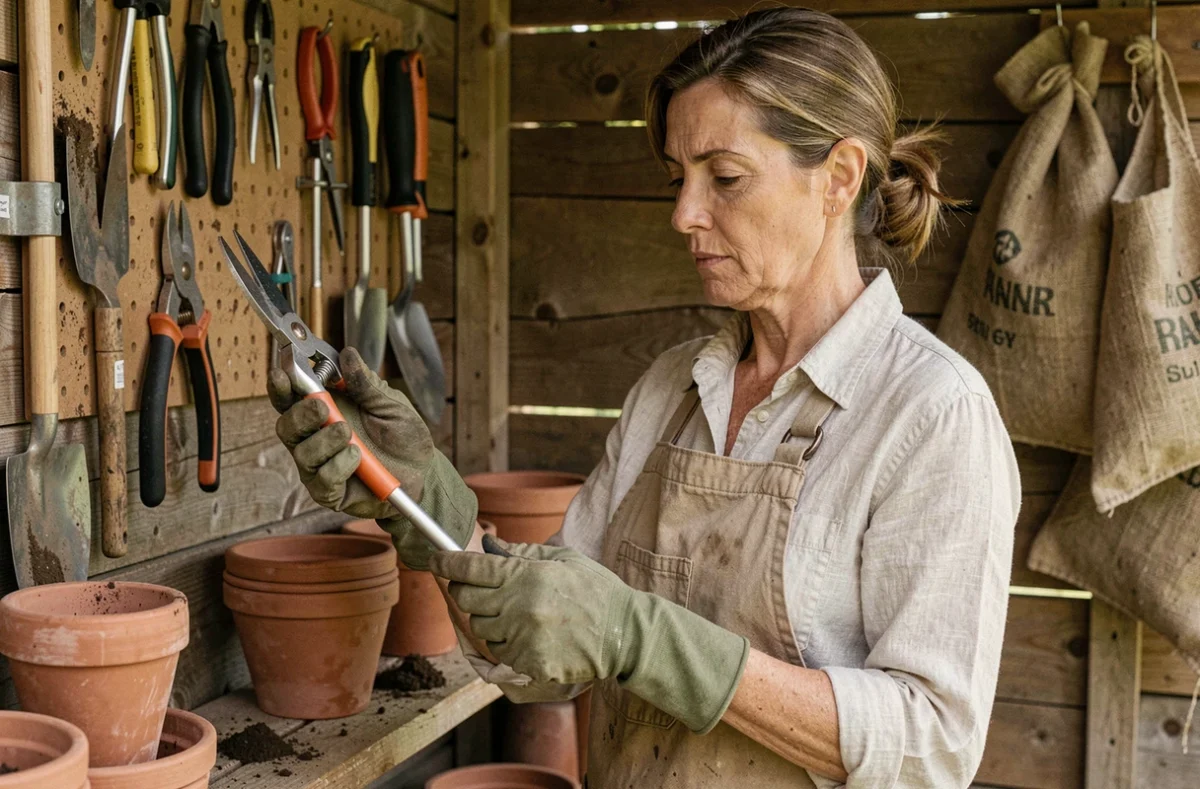
A new pair of pruning shears cuts well, and a cordless lawn mower does a good job during its first season. The real test comes three or four years later, when the battery starts to fade or a part breaks. In France, regulations require spare parts for powered gardening tools to remain available for ten years after the last new unit is placed on the market.
European regulations also set requirements for built-in portable batteries, including their removal and replacement, and their availability as spare parts. These timeframes provide practical benchmarks for comparing equipment before you buy.
Parts and battery availability: the comparison that can change your decision
Most gardening guides group tools by task (soil preparation, pruning, watering). This approach overlooks a decisive factor: how long the tool will remain repairable.
| Criteria | Regulatory requirement | What gardeners should check |
|---|---|---|
| Spare parts (powered tools) | Available for 10 years after the last unit is placed on the national market | Does the manufacturer publish a parts catalogue? Is its distribution network active in France? |
| Built-in portable batteries | Availability provided for under European regulations (requirements phased in over time) | Can the battery be removed? Is there a shared format across several tools in the range? |
| Hand tools (steel, stainless steel) | No specific requirement | Can the handle be replaced? Are the fasteners standard? |
This table highlights a clear difference between powered tools, which are subject to quantified requirements, and hand tools, where repairability depends entirely on the manufacturer’s design choices. For an electric pair of pruning shears or a cordless lawn mower, battery compatibility matters just as much as motor power.
Browsing Bon Jardinier’s equipment can help you identify product ranges whose batteries and accessories are interchangeable across several models, extending the actual lifespan of your investment.
Cordless tools: why the battery platform matters more than power
The usual approach is to compare voltage (18 V, 36 V, 56 V) or advertised runtime. These figures matter, but they obscure the key question: will the battery work with all tools from the same brand?
Some manufacturers offer a single platform where the same battery powers a hedge trimmer, leaf blower, lawn mower and chainsaw. Others split their ranges, requiring a different battery format for each tool category. Over five or ten years, the cost difference can be significant.
What to check before buying a cordless tool
- How many tools in the manufacturer’s catalogue are compatible with the same battery format: the broader the range, the more value you get from your initial investment.
- Whether the battery can be removed and replaced without a special tool—a requirement that European regulations are gradually strengthening.
- Whether there is an authorised repair network or spare parts available online for the French market, beyond the manufacturer’s warranty alone.
A cordless tool with a battery welded to its housing will become waste as soon as the cell loses capacity. Even if the motor still works, the tool will be unusable. A removable, shared battery format protects your investment over several seasons.
Steel hand tools: real durability depends on the material and handle
There is no legal requirement for spare parts to be available for hand tools. Their durability therefore depends entirely on the choice you make at the outset.
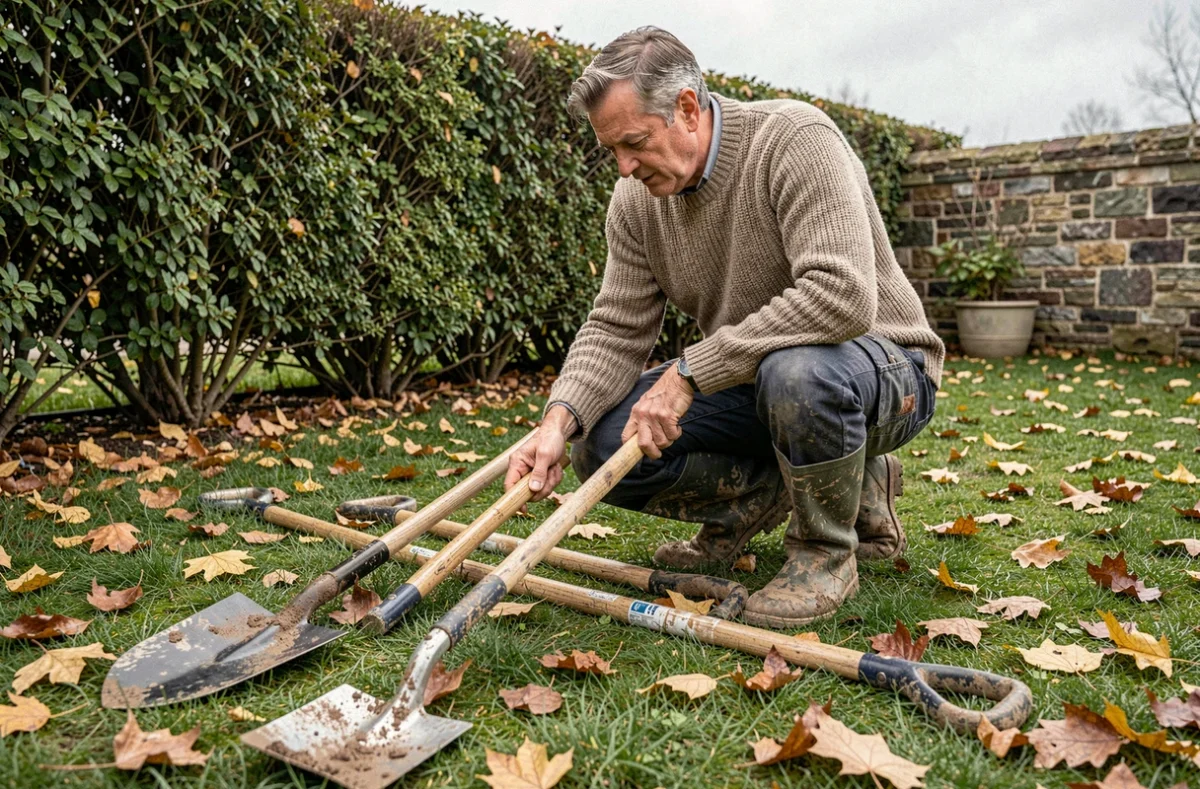
Heat-treated steel remains the benchmark for soil work: broadforks, digging forks and spades. It withstands bending and repeated impacts. Stainless steel, on the other hand, is ideal for tools exposed to prolonged moisture, such as soil blockers and dibbers used in greenhouses.
The handle often determines a tool’s lifespan more than its head. A tubular steel or fibreglass handle lasts longer than a softwood handle, which can break under leverage after just a few seasons. A handle screwed or fitted into a socket can be replaced; a riveted or glued handle makes the whole tool unusable.
How to choose a durable hand tool
- Heat-treated steel heads for soil tools; stainless steel for damp environments.
- A handle secured with a socket or through-bolt, never permanently riveted in place.
- Spare parts listed on the manufacturer’s website (handle, pruning shear spring, blade).
- A weight suited to the user: an overly heavy tool causes fatigue and encourages you to apply too much force, accelerating wear on the fasteners.

Noise from powered tools: a regulatory factor often overlooked
In France, there is no single nationwide time window for using noisy gardening tools. Municipal or prefectural orders set the permitted hours, and noise may be considered excessive depending on its intensity, duration, frequency and the neighbourhood context.
Checking your local rules before buying a petrol lawn mower or chainsaw can help you avoid disputes and sometimes fines. A cordless electric tool is generally quieter than a petrol model, which can extend the permitted hours of use and reduce disturbance.
This factor is linked to the choice of power source: choosing cordless equipment to reduce noise makes it even more important to select a long-lasting battery platform, since the tool will be used over a longer lifespan.
Buying second-hand: check how much useful life remains
French administrative guidance on refurbished products highlights the importance of informing buyers about spare-parts availability. For a second-hand powered tool, two checks are essential: the battery’s condition (remaining charge cycles and actual capacity) and the date the model was placed on the market, which determines how long parts will remain available.
A second-hand tool whose model was first sold eight years ago has only two years of guaranteed parts availability left. This simple calculation, rarely made at the time of purchase, can change how you view the asking price.
It pays to think of gardening equipment as a multi-year investment. The material of the tool head, handle type, battery format and manufacturer’s spare-parts policy matter more than the initial purchase price or the list of features on the packaging.