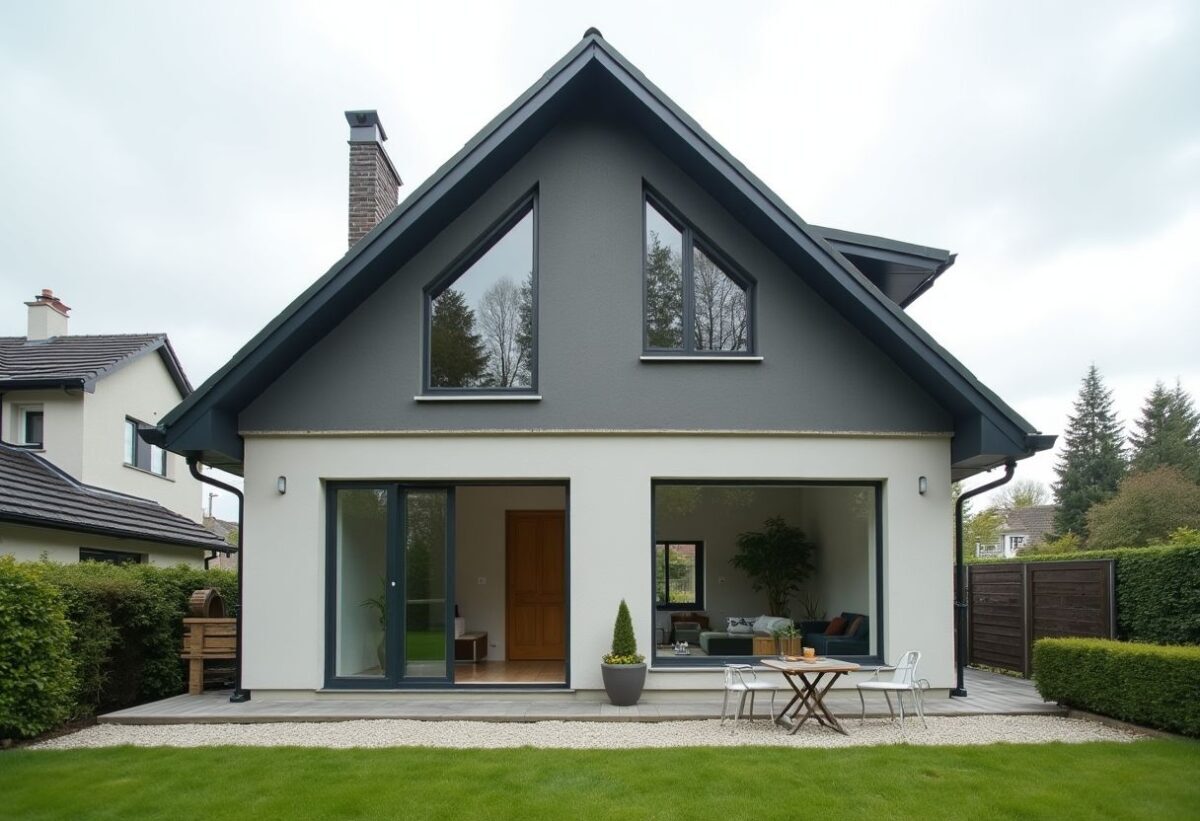
In the relentless quest to improve the comfort of our homes while reducing our ecological footprint, external insulation proves to be an innovative and effective solution. Energy-hungry houses and exorbitant heating bills are now a thing of the past for those who dare to choose this method. Indeed, external insulation helps to retain heat in winter and coolness in summer, while preserving the interior appearance of your home. It stands out for its ability to transform the most dilapidated buildings into modern and eco-friendly homes.
Such renovation is a wise investment, in line with contemporary sustainable development requirements.
The advantages of external insulation
Choosing external insulation for your home offers a myriad of benefits that touch on both practical and aesthetic aspects.
- Energy savings: Reducing thermal losses is essential to decrease your energy consumption. External insulation allows you to achieve substantial savings on your heating bills.
- Improved thermal comfort: This technique ensures optimal comfort by maintaining a stable temperature indoors, regardless of the season.
- Preservation of interior space: Unlike interior insulation, it does not reduce the living space of your home.
- Aesthetics and modernization: The exterior appearance of your home can be completely revamped, offering an opportunity for aesthetic renovation.
External insulation techniques
There are several methods to achieve external insulation, each tailored to specific needs and constraints.
Insulating coating: This technique involves applying a coating over an insulating material, generally polystyrene or rock wool. It is ideal for facades that require minimal renovation.
Insulating cladding: Prefabricated in a factory, cladding is a turnkey solution that includes both the insulation and the exterior finish. It offers quick and efficient installation.
Attached cladding: This method uses panels fixed to a framework, offering a wide range of aesthetic finishes, from wood to aluminum, and ensuring excellent protection against the elements.
The implementation process
Carrying out external insulation requires a meticulous process, involving different phases to ensure an optimal result.
- Initial diagnosis: A precise assessment of the facade’s condition and thermal needs is essential to choose the most suitable insulation method.
- Site preparation: This step involves setting up scaffolding and securing the work area.
- Installation: Specialized teams proceed with the installation of the insulation and the finishing of the facade according to the aesthetic choice made beforehand.
- Controls and finishes: A rigorous quality control of the installation is essential to ensure energy efficiency and the aesthetics of the final result.
Available subsidies and financial assistance
There are many financial aid programs that facilitate access to external insulation, making this project affordable for everyone.
Homeowners can benefit from the Tax Credit for Energy Transition (CITE), which allows them to deduct part of the expenses related to insulation work.
Additionally, zero-interest eco-loans offer the possibility to finance the project without paying interest.
There are local subsidies that may vary by region. Programs like « MaPrimeRénov’ » also provide direct financial assistance, easing the economic burden of the work.