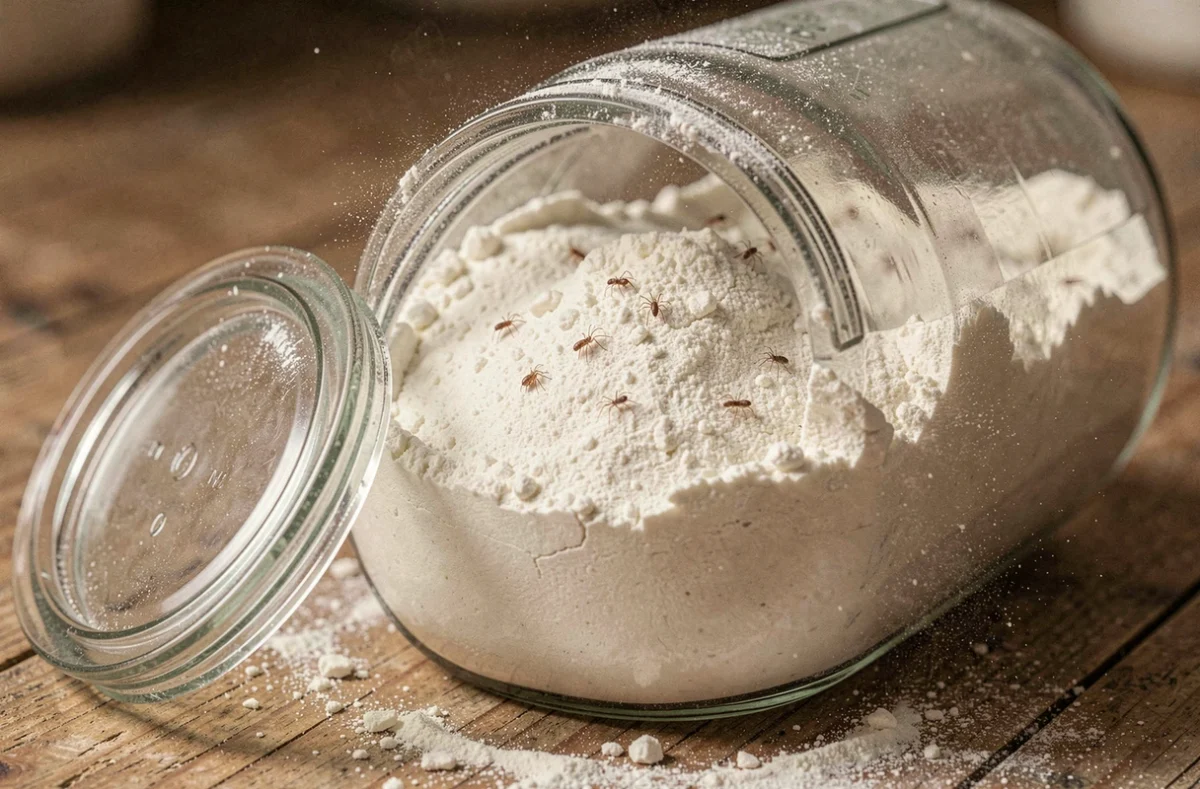
Flour mites are microscopic pantry mites, primarily species like Acarus siro and Tyrophagus putrescentiae. Their size, between 0.2 and 0.5 mm, makes them nearly invisible to the naked eye. They thrive in stored dry goods (flour, cereals, spices) as soon as the humidity and temperature conditions are suitable for them.
Humidity of the product and the reproduction cycle of flour mites
Most guides mention the ambient humidity of the kitchen as a risk factor. This parameter matters, but it obscures a more determining mechanism: it is the moisture contained in the product itself that conditions the multiplication of storage mites.
An opened bag of flour, even in an apparently dry kitchen, can absorb enough water vapor to become a favorable environment. The moisture content of the product, combined with the availability of organic matter, is enough to trigger a rapid reproduction cycle. Mites go from egg stage to adulthood in a few weeks depending on the conditions.
Understanding flour mites in the kitchen involves this distinction: a ventilated cupboard does not protect a product whose packaging allows humid air to enter. The problem lies with the container, not just the room.
The species Tyrophagus putrescentiae, for example, is associated with foods rich in fats or proteins, not just flour. A persistent infestation can therefore concern products that one might not spontaneously think of: oilseeds, nutritional yeast, spice blends.

Health risks of storage mites for allergic individuals
The danger of flour mites is not limited to the deterioration of taste or texture of food. Storage mites and their debris are allergens. Their presence in a contaminated product can trigger reactions in sensitive individuals.
Reported symptoms include respiratory reactions (rhinitis, worsening asthma) and skin irritations. The specialized literature also mentions cases of anaphylactic reactions after ingestion of foods contaminated by these mites, which justifies particular vigilance for individuals allergic to house dust mites.
Not every exposure necessarily triggers a reaction. The risk depends on the level of individual sensitization and the amount of allergens ingested or inhaled. For a household without a known allergic background, the presence of flour mites remains a food hygiene issue before it becomes a medical problem.
Identifying a flour mite infestation
Direct visual detection is difficult. An isolated mite is too small to be spotted without a magnifying glass. Two clues can suggest their presence:
- A fine whitish or grayish dust on the surface of the flour or on the walls of the container, corresponding to the accumulation of molts and droppings.
- A slightly acrid or moldy smell emanating from a package that is otherwise recent, indicating that the mites have altered the product.
- A “living” appearance of the surface when observing the flour under low-angle light: the tiny movements of the mites become perceptible.
If doubt persists, placing a sample of flour on a dark surface and waiting a few minutes can sometimes reveal movements. Any suspicious product must be discarded, not just sifted.
Effective prevention: airtight storage and stock rotation
Airtight storage remains the most reliable preventive measure. Transferring flour, cereals, and spices into rigid airtight containers (glass, metal, thick food-grade plastic) cuts off access to ambient moisture and prevents colonization.
Three actions that reduce the risk of infestation
- Empty and clean cupboards regularly, vacuuming the corners where flour residues and crumbs accumulate, an ideal substrate for mites.
- Maintain a strict stock rotation: consume the oldest products first and avoid keeping dry goods for several months after opening.
- Check the condition of packages upon purchase. A torn or poorly sealed package in the store may already be contaminated before reaching the cupboard.
The refrigerator constitutes an unfavorable environment for mites. Temporarily storing flour in the cold after purchase, for a few days, can eliminate mites present at an early stage. This method also works for dried fruits and seeds.
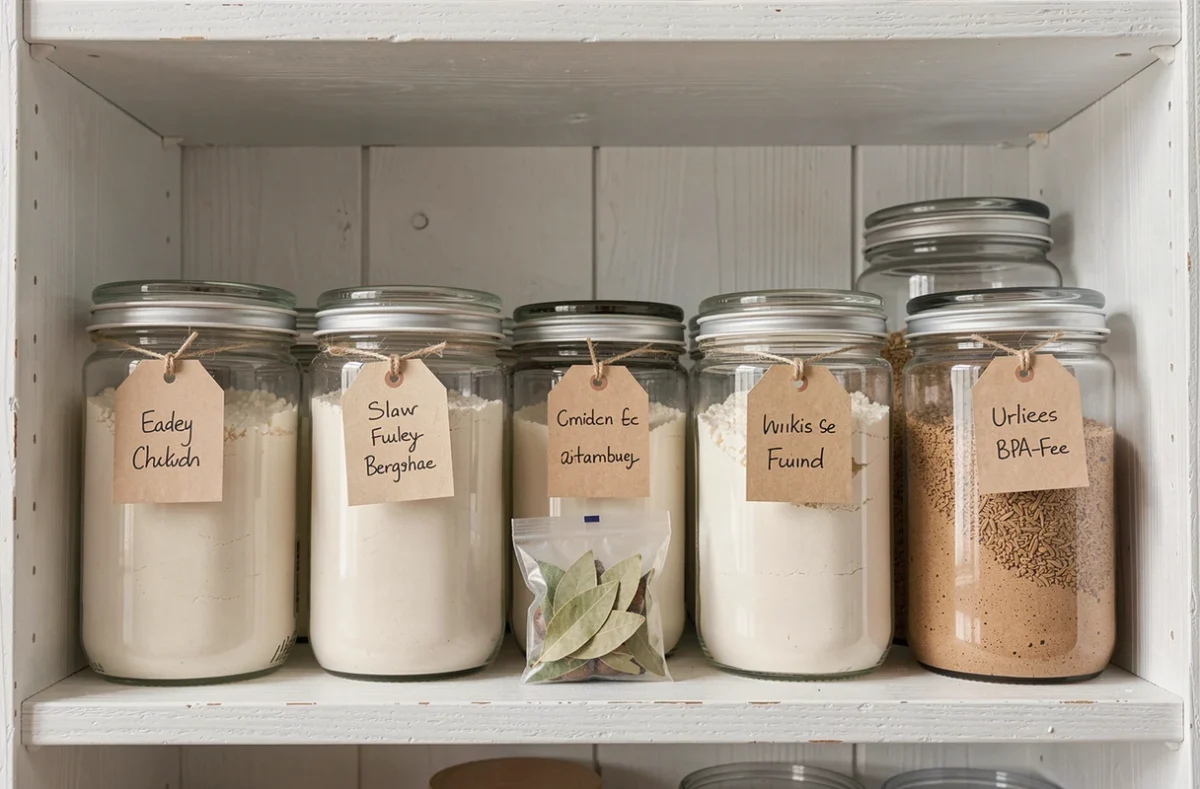
Disinfecting the cupboard after a mite infestation
When the infestation is confirmed, cleaning the cupboard must be methodical. Discard all opened products from the affected cupboard, even those that appear intact: mite eggs are microscopic and can be present without visible signs.
Thoroughly vacuum the inside of the furniture, including hinges and seals. Then wash the surfaces with vinegar water or a cleaner suitable for food contact. Allow to dry completely before replacing products: any residual moisture restarts the cycle.
Some insecticides based on plant pyrethrum are used against storage mites. Their use in a food storage space requires following the manufacturer’s precautions and waiting the recommended contact time before replacing food.
The return of mites after treatment often indicates an untreated source of moisture or a product forgotten in a corner of the cupboard. Identifying the precise species of mite can then guide the search, as their food preferences vary.