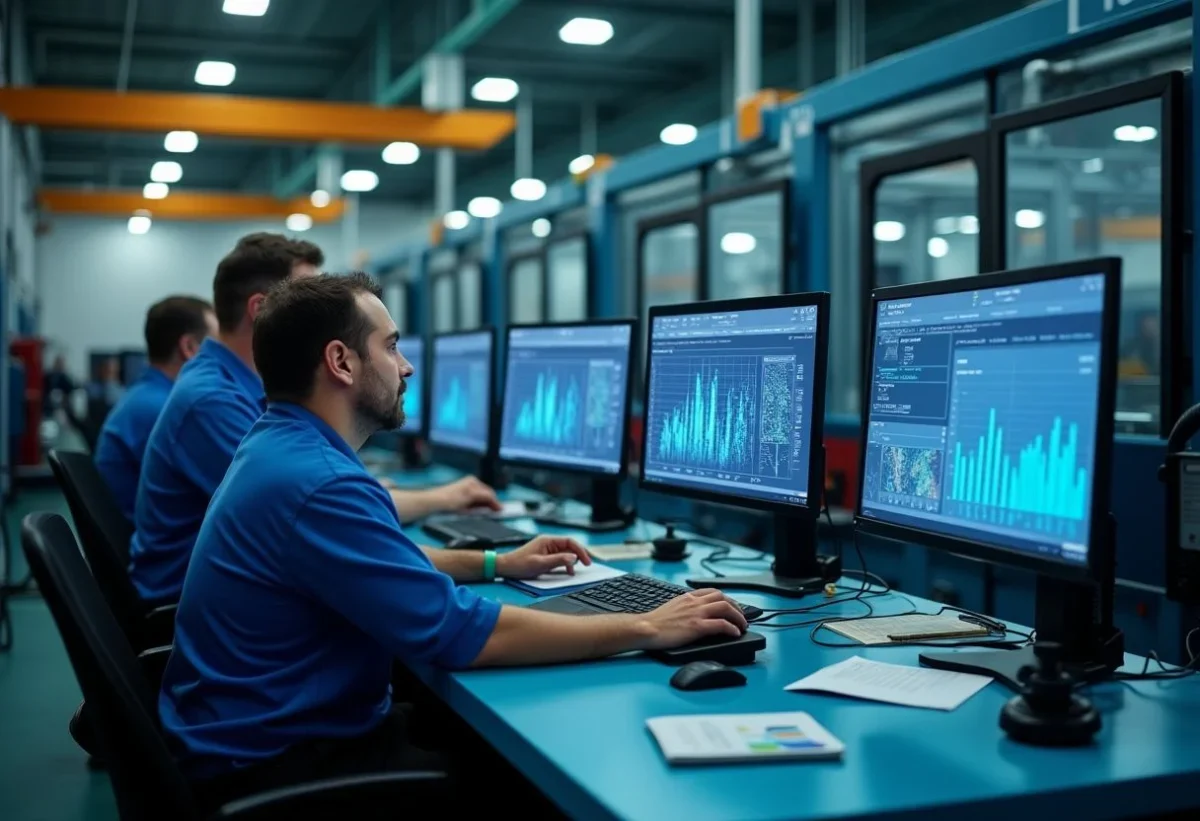
In a world where digital transformation has become the norm, industrial companies are constantly seeking ways to improve their efficiency, reduce costs, and increase their competitiveness. The Industrial ERP positions itself as a comprehensive solution, allowing for the centralization of all components of the company, from inventory management to logistics chain optimization, including human and financial resource management. In an era where margins for maneuver are shrinking and companies must quickly adapt to market fluctuations, choosing a suitable ERP is no longer an option, but a strategic necessity.
What is an industrial ERP?
Before diving into the benefits provided by an ERP, it is essential to understand what this term, which may seem technical, actually encompasses.
An Industrial ERP (Enterprise Resource Planning) is an integrated software that manages all operational processes of a company. It centralizes and unifies all information, thereby eliminating information silos and facilitating decision-making. The concept is based on the idea that all functions of the company must communicate with each other in a fluid and coherent manner.
By deploying such a system, companies benefit from complete and real-time visibility of their operations. The data collected is analyzed to identify trends, optimize processes, and drive overall performance.
The integration of an ERP is often perceived as a complex project, but its advantages far outweigh its challenges.
The advantages of an ERP for industrial companies
Adopting an Industrial ERP brings tangible and immediate benefits for companies that choose to embark on this path.
- Process optimization: All processes, whether related to production, order management, or logistics, become smoother and better coordinated.
- Cost reduction: Thanks to automation and better resource management, companies quickly notice a decrease in operational costs.
- Quality improvement: ERP systems allow for tracking and controlling every step of manufacturing, thus ensuring consistent quality and optimal traceability.
- Effective human resource management: Centralizing HR data promotes more rational talent management and better planning of personnel needs.
The challenges of implementing an ERP
Implementing an Industrial ERP is not without challenges, and companies must be prepared to face them to succeed in their digital transformation.
One of the main obstacles lies in the resistance to change within the organization. Changing work habits and adopting new technologies can provoke reluctance. A well-thought-out change management strategy is essential to support teams through this transition.
Moreover, the initial cost of implementation may seem high, but it should be considered a long-term investment. Companies must also pay attention to the compatibility of the ERP with their existing systems to avoid any service interruptions.
Finally, choosing the right technology partner is crucial to ensure effective support and successful implementation.
How to choose the right industrial ERP
The choice of an adequate Industrial ERP relies on a thorough analysis of the specific needs of the company and its long-term objectives.
- Assess business needs: Identify key processes that require improvement and will benefit most from automation.
- Consider scalability: Ensure that the ERP can evolve with the company and adapt to market changes.
- Analyze functionalities: Verify that the software offers all necessary features to meet the company’s requirements, particularly in terms of production management and logistics.
- Look into integration: Choose an ERP capable of easily integrating with other systems already in place to avoid technical complications.