
The term “natural” on a cosmetic does not guarantee either an impeccable composition or superior effectiveness. The ISO 16128 standard provides a method for calculating the natural index of an ingredient, but its application remains voluntary. No harmonized legal category regulates the term in the European Union, leaving manufacturers with a wide margin for interpretation. Understanding this regulatory ambiguity is the first lever to build a natural beauty routine that lives up to its promises.
INCI List and Claims: Analyzing the Label of a Natural Cosmetic
We recommend reading the INCI list before any marketing claims. The order of ingredients reflects their decreasing concentration: a plant active placed at the end of the list represents a negligible fraction of the formula, even if the packaging highlights it.
Allergenic fragrance substances must be declared individually beyond certain thresholds, including when they come from significant oils or plant extracts. A significant lavender oil, for example, contains linalool and limonene, two regulated allergens. A “100% natural” product can therefore trigger skin reactions in sensitive skin.
Environmental claims will be more strictly controlled at the European level. Claiming that a product is “planet-friendly” without substantiated proof will no longer be tolerated. To delve deeper into these reading criteria and identify genuinely committed formulations, a useful resource is: https://www.beauteauthentique.fr/, which details the concrete indicators to check on each product.
The compliance of a cosmetic relies on the manufacturer’s responsibility, not on prior validation by the administration. The product must be notified on the European CPNP portal and include an information dossier containing a safety assessment. No authority certifies the announced effectiveness in advance.
Minimalist Beauty Routine: Why Reduce the Number of Products
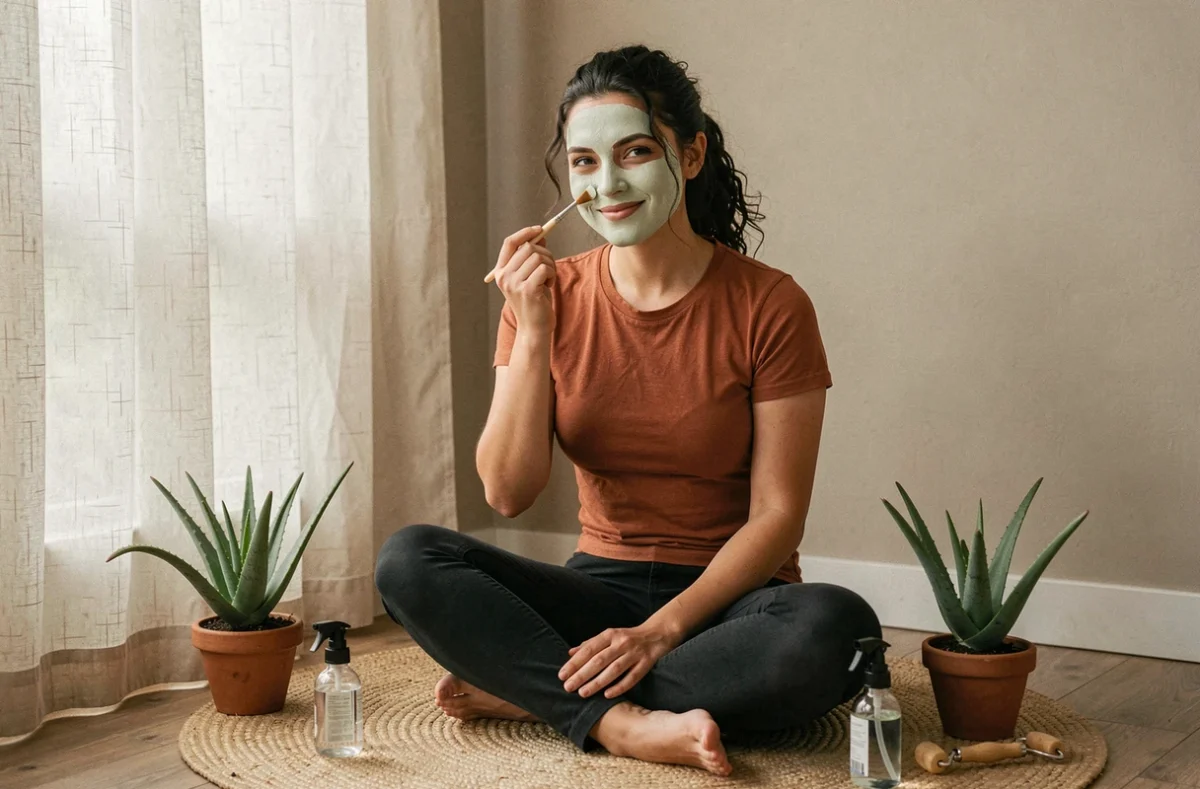
Skinimalism is not a passing trend. Using multiple facial treatments increases the risk of interactions between active ingredients and weakens the skin barrier. Three to four well-formulated products cover the majority of the needs of healthy skin.
We observe that combination to oily skin types are the first victims of excessive treatments. Layering a vitamin C serum, an acid exfoliant, and a plant oil on the same evening often causes redness or excess sebum production. The most effective routine remains sequential: gentle cleansing, targeted hydration, and sun protection in the morning.
Selection of Versatile Natural Ingredients
Some natural actives serve multiple functions, simplifying the routine without sacrificing results:
- Raw honey acts as a humectant, mild antibacterial, and soothing agent, usable as a face mask or lip balm.
- Jojoba oil mimics human sebum and is suitable for most skin types, including oily skin, by regulating lipid production.
- Aloe vera gel hydrates, calms irritations, and serves as a base to dilute significant oils in a body care product.
A natural ingredient is not automatically risk-free. The European REACH and CLP frameworks serve to characterize the hazardous properties of certain substances and mixtures, whether synthetic or of plant origin. Checking the compatibility of an active with one’s skin remains a non-negotiable step.
Natural Hair Care: Distinguishing Useful Plant Oils from Marketing
The natural hair care market is full of promises around oils. Not all oils are equal, and their method of application radically changes the result.
Penetrating oils (coconut, avocado) pass through the hair cuticle and strengthen its internal structure. They are applied before shampooing, in an oil bath for several hours. Film-forming oils (argan, castor) remain on the surface and smooth the scales. They are used as a finishing touch on towel-dried hair, in minimal amounts.
Applying a film-forming oil to dry, porous hair without prior hydration worsens dryness. The oil seals what is underneath it. If the hair has not been hydrated (water, aloe vera gel, leave-in treatment), it traps the lack of water instead of correcting it.
Waterless Formulas and Refills: What the Market Offers
Solid cosmetics (shampoos, conditioners, facial cleansers) eliminate the need for water-soluble preservatives like parabens and reduce packaging volume. Their concentration of surfactants is often higher: we recommend checking for gentle surfactants derived from coconut (coco-glucoside, decyl glucoside) rather than sodium lauryl sulfate, even in its natural version.
Bulk refill systems or soft pouches are gaining ground. They do not change the formula but reduce the plastic consumed over time.
Allergens and Significant Oils: Precautions That Beauty Advice Omits
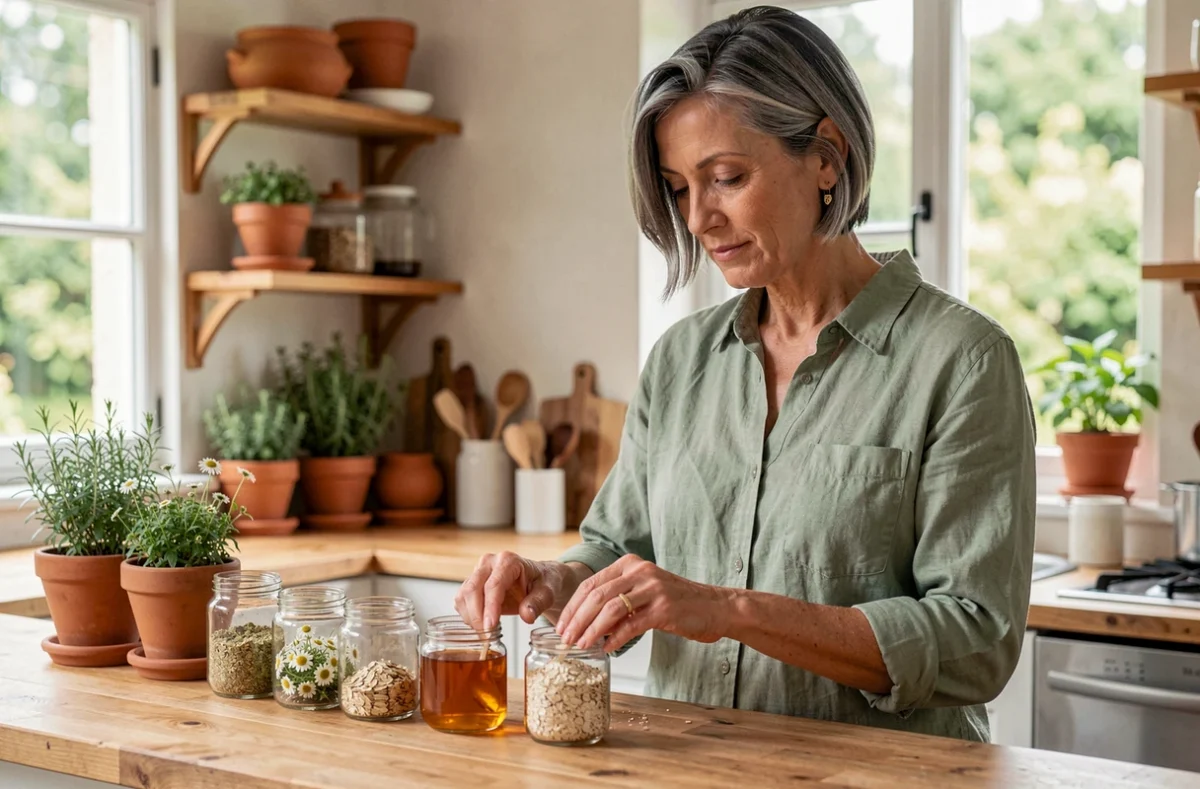
Significant oils concentrate active molecules at levels incomparable to a raw plant. A drop of pure tea tree oil can cause contact dermatitis in a sensitized individual. Dilution in a carrier vegetable oil (between one and three percent depending on the application area) is not optional.
Pregnant women, children under six, and individuals on medication should consult a healthcare professional before any topical use of significant oils. This reminder is often missing in the majority of mainstream content on natural beauty.
- Perform a patch test in the elbow crease at least twenty-four hours before the first application on the face.
- Never apply pure significant oil to a mucous membrane or around the eyes.
- Store bottles away from light and heat to avoid oxidation, which increases allergenic potential.
Everyday natural beauty relies less on the accumulation of organic products than on a rigorous reading of compositions and usage tailored to one’s skin type. A well-chosen cosmetic, correctly dosed and applied at the right time, is more effective than a poorly calibrated ten-step routine.