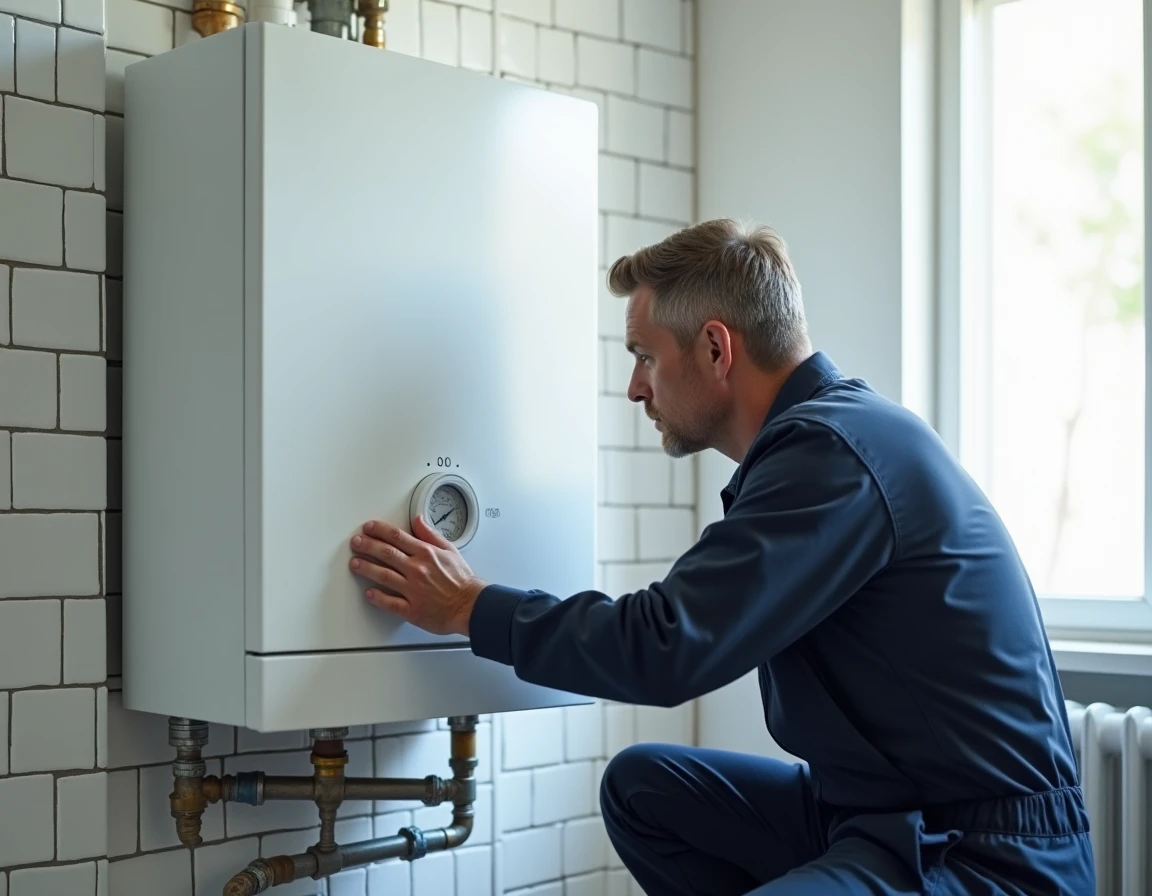
A gas boiler transforms the energy contained in natural gas (or propane) into heat, distributed via a water circuit to radiators or underfloor heating. The efficiency of this transformation, expressed as a percentage based on LHV, directly determines the energy bill. Choosing a model suitable for one’s home remains the main lever to reduce consumption.
Efficiency based on LHV and HHV: what technical sheets don’t always specify
Manufacturers often display an efficiency greater than 100%. This figure is not absurd, but it relies on a calculation convention that most buying guides do not explain. The efficiency based on LHV (lower heating value) does not take into account the recoverable energy from the water vapor in the flue gases. A condensing boiler recovers this latent energy, allowing it to exceed 100% based on LHV.
The efficiency based on HHV (higher heating value) includes this condensation energy in the baseline reference. A model rated at 109% based on LHV actually operates around 98% based on HHV. Reading the technical sheet without knowing the convention used skews any comparison between two devices.
Before consulting a comparison of gas boilers on Expertise Maison, ensuring that the efficiencies are expressed in the same unit avoids common judgment errors. A two-point difference in efficiency based on HHV translates to several dozen euros in annual savings for an average-sized home.
Gas condensing boiler: why it dominates the market
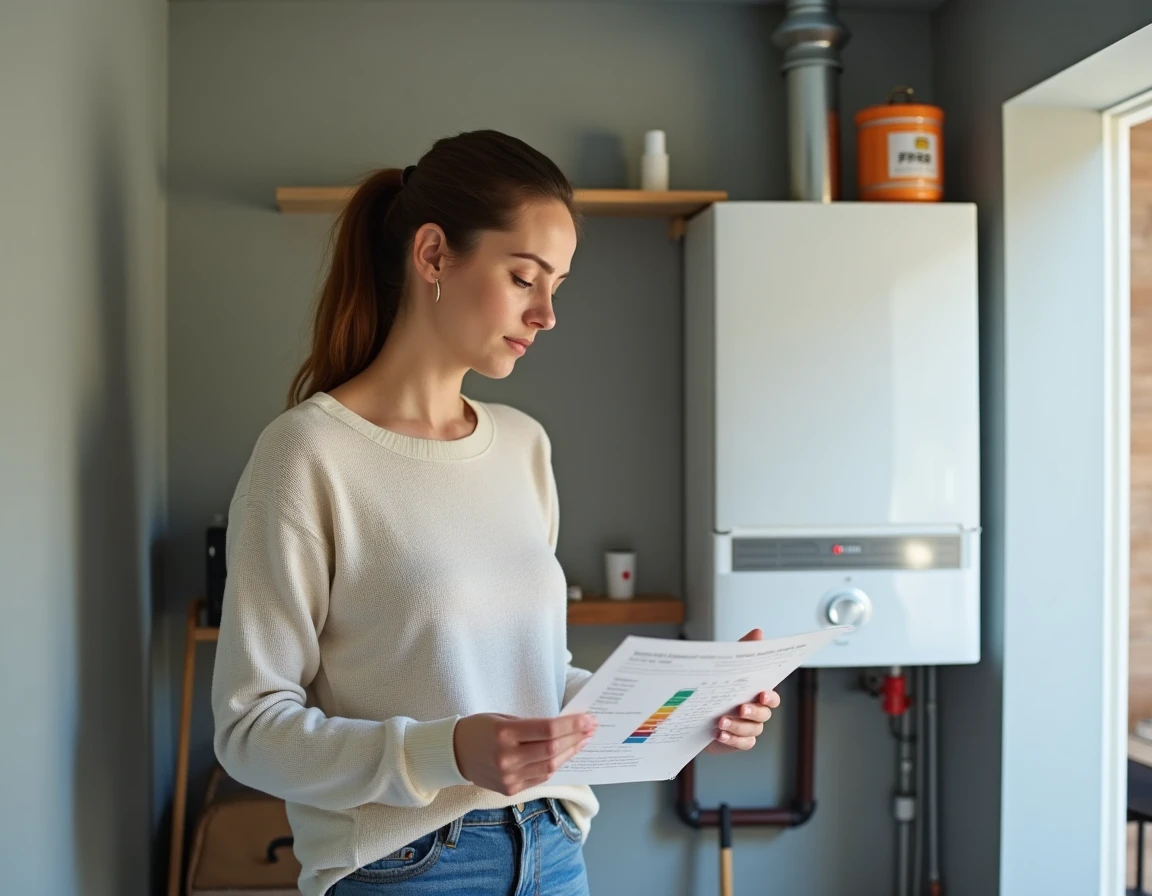
The gas condensing boiler accounts for the vast majority of new sales. Its principle is based on a secondary heat exchanger that cools the flue gases below the dew point (about 55 °C for natural gas). The water vapor contained in these flue gases condenses, releasing additional energy that is reinjected into the heating circuit.
This technology works even better when the return water temperature is low. Underfloor heating (returning around 30-35 °C) continuously exploits condensation. High-temperature radiators (returning at 60 °C or more) significantly reduce the actual gain. The type of emitters determines the effective efficiency of the condensation.
Hybrid gas and heat pump condensation
Some manufacturers offer hybrid systems that couple a gas condensing boiler with an air-water heat pump. The heat pump provides heating as long as the outside temperature remains moderate. The boiler takes over during cold spells. This alternating operation optimizes overall costs by using electricity when its unit price is lower than gas.
These hybrid systems remain significantly more expensive to purchase. Their relevance depends on the local climate, the price of gas per kWh compared to electricity per kWh, and the area to be heated.
Gas taxation in 2025-2026: a parameter that changes the calculation
As of March 1, 2025, the installation of a gas boiler is subject to the normal VAT rate of 20% on supply and installation. The reduced rates of 5.5% or 10% that previously applied have been eliminated by the 2025 finance law.
MaPrimeRénov’ no longer finances the installation of individual gas boilers since 2023. The specific heating bonus for gas boilers was already removed as of July 1, 2021. In 2026, no direct tax aid remains for a standalone gas boiler.
This disappearance of aids alters the economic calculation. The initial extra cost of a heat pump or hybrid system, partially offset by the public aids that these devices still benefit from, reduces the gap with a gas condensing boiler. Comparing technologies without incorporating this tax parameter gives a distorted picture of the real cost over ten or fifteen years.
Technical criteria for choosing between gas boiler models
Beyond the technology (condensing, low temperature, classic), several technical parameters differentiate the models available from brands like Saunier Duval, Frisquet, Elm Leblanc, Atlantic, or Viessmann.
- Nominal power: it must correspond to the thermal losses of the home. An oversized device multiplies short cycles (on/off), which degrades efficiency and accelerates component wear.
- Production of domestic hot water: micro-accumulation models or those with integrated tanks offer better flow comfort than instantaneous models, especially when multiple draw-off points are used simultaneously.
- Type of installation (wall-mounted or floor-standing): a wall-mounted boiler is suitable for most average-sized apartments and houses. Floor-standing models, which are bulkier, are justified for larger homes requiring high power or a significant storage tank.
- Energy class and modulation: a modulating burner continuously adjusts its flame rather than operating in an all-or-nothing manner, which reduces consumption and improves temperature consistency.
Brands and positioning
Saunier Duval dominates the wall-mounted boiler segment in France. Frisquet stands out for its French manufacturing and reputation for long-term durability. Elm Leblanc (Bosch group) and Atlantic cover a wide range, from entry-level to high-end. Viessmann and Vaillant, of German origin, focus on technological integration (connectivity, advanced regulation).
The choice of a brand weighs less than the suitability between power, type of emitters, and installation quality. A premium boiler that is poorly sized or poorly connected will consume more than a mid-range model properly installed by a qualified professional.
Annual mandatory maintenance, regardless of the model, also conditions the longevity of the device. A maintenance contract with a certified technician allows for checking the actual efficiency each year and anticipating the replacement of wear parts before a breakdown occurs in the middle of winter.