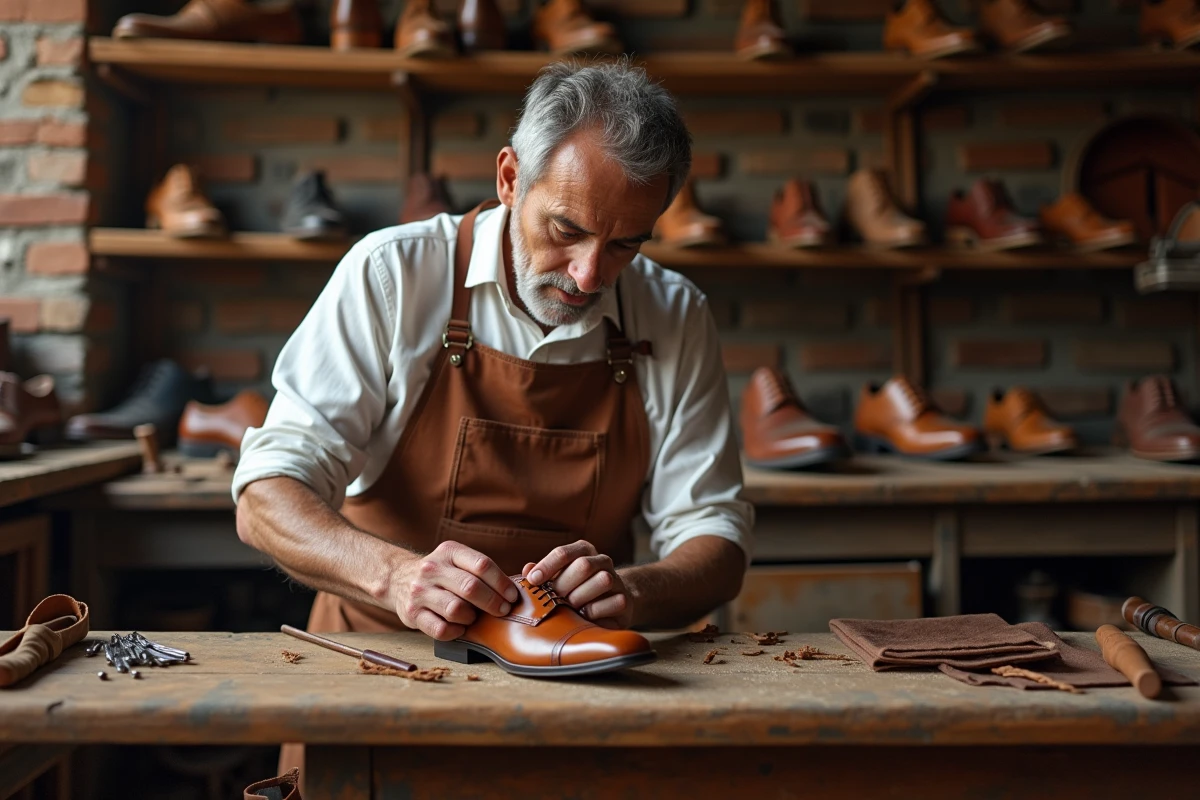
The geography of shoe manufacturing is not just about a ranking of volumes. Choosing a production country involves trade-offs regarding assembly quality, component availability, logistics timelines, and the ability to handle short runs. We have observed deep reconfigurations in supply chains over the past few seasons, and the landscape of 2025 no longer resembles that of five years ago.
Total production cost: beyond the minute price
Comparing countries solely on labor cost is a common mistake. The total cost includes material sourcing, waste rate, and freight. A pair assembled in China with leather imported from Italy and shipped by sea to Europe accumulates additional costs that the workshop rate does not reflect.
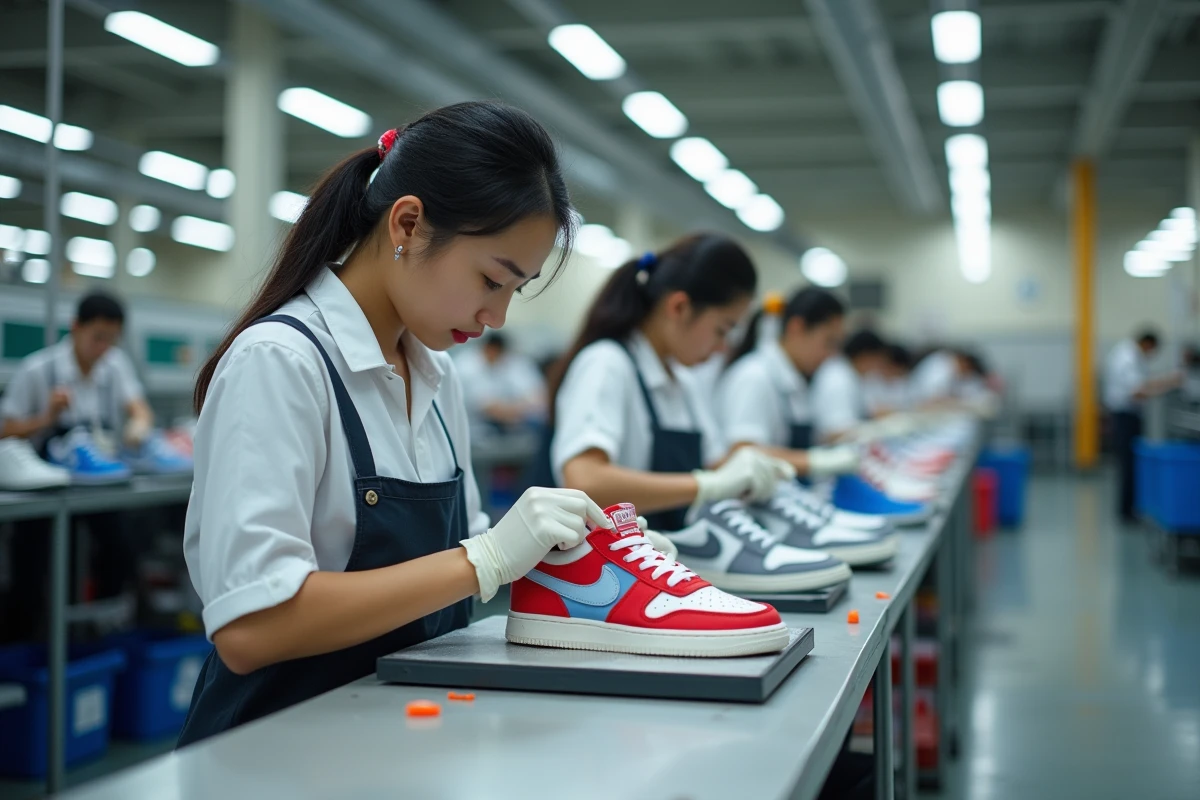
China remains competitive on very large volumes thanks to an integrated ecosystem: tanneries, sole manufacturers, hardware suppliers, and assembly workshops coexist within a limited radius, particularly around Guangzhou and Quanzhou. This industrial density reduces downtime between each step of the process.
Vietnam, on the other hand, has built its competitiveness on a different model. Free trade agreements with the European Union and the so-called “China+1” strategies of major sports brands have made it a structural pillar for sneakers and technical shoes. Vietnam is no longer a substitute for China, but an autonomous hub with its own supply chains for synthetic components.
To better understand the origin of Geox and Tamaris shoes, we need to look at how these brands balance costs, expertise, and logistical proximity according to their ranges.
Leather shoe manufacturing: the Southern Europe triangle
Italy, Portugal, and Spain form a trio that we consistently recommend for medium and high-end leather shoes. Each country occupies a distinct niche.
- Italy retains mastery of blake and goodyear assembly on city and luxury lines. Workshops in the Marche and Veneto regions regularly collaborate with French and German brands on series of a few hundred pairs.
- Portugal has captured an increasing share of European production thanks to lower labor costs than Italy, while maintaining a high technical level. The country has specialized in premium sneakers and white label collections for European brands.
- Spain maintains recognized expertise in women’s shoes (notably espadrilles and heeled sandals), with regions like Elche and Almansa remaining active despite Asian pressure.
These three countries accept MOQ (minimum order quantities) much lower than in Asia, making them accessible to young brands looking to launch a first collection without tying up tens of thousands of pairs in stock.
India and Mexico: two trajectories to watch closely
India is showing rapid growth in its production capacity, driven by both a massive domestic market and a government desire to develop exports. The country has historic tanneries, particularly in Tamil Nadu, and an abundant workforce. The current limitation remains the consistency of quality in finishes and the lack of vertical integration compared to China.
Mexico is establishing itself as a nearshore option for the North American market. The USMCA (formerly NAFTA) offers favorable tariff conditions, and the geographical proximity reduces delivery times to a few days compared to several weeks from Asia. Several analysts report a shift of sports and leisure shoe lines to Mexico since 2023, a trend that most articles on the subject overlook.
What India and Mexico are not yet doing well
Neither competes with Vietnam or China on technical shoes with a high synthetic component (breathable mesh, injected EVA foams, TPU soles). The ecosystem of specialized subcontractors is still too fragmented to ensure smooth production in these categories.
Choosing a manufacturing country based on the type of shoe
The best country depends on the product, not on a universal ranking. We use a simple grid with three criteria to guide sourcing.
- Volume and target price: for series exceeding ten thousand pairs in entry or mid-range, China and Vietnam remain the most structured options.
- Dominant material: a full-grain leather shoe benefits from being produced in Southern Europe, where tanneries are nearby and assemblers are trained in leather work.
- Destination market: a brand that primarily sells in the United States should consider Mexico for its casual lines, while a European brand can shorten its timelines by producing in Portugal.
The underlying trend we observe is towards diversification: brands are spreading their production across two or three countries to limit the risk associated with a single supplier or regional logistical instability.
The manufacturing country is never a fixed choice. Tariffs evolve, trade agreements are renegotiated, and industrial capacities shift. A brand that sourced all its production in China ten years ago is likely now working with at least one Vietnamese or Portuguese workshop. Diversifying production sources has become a condition of resilience, not a strategic luxury.